Introduction
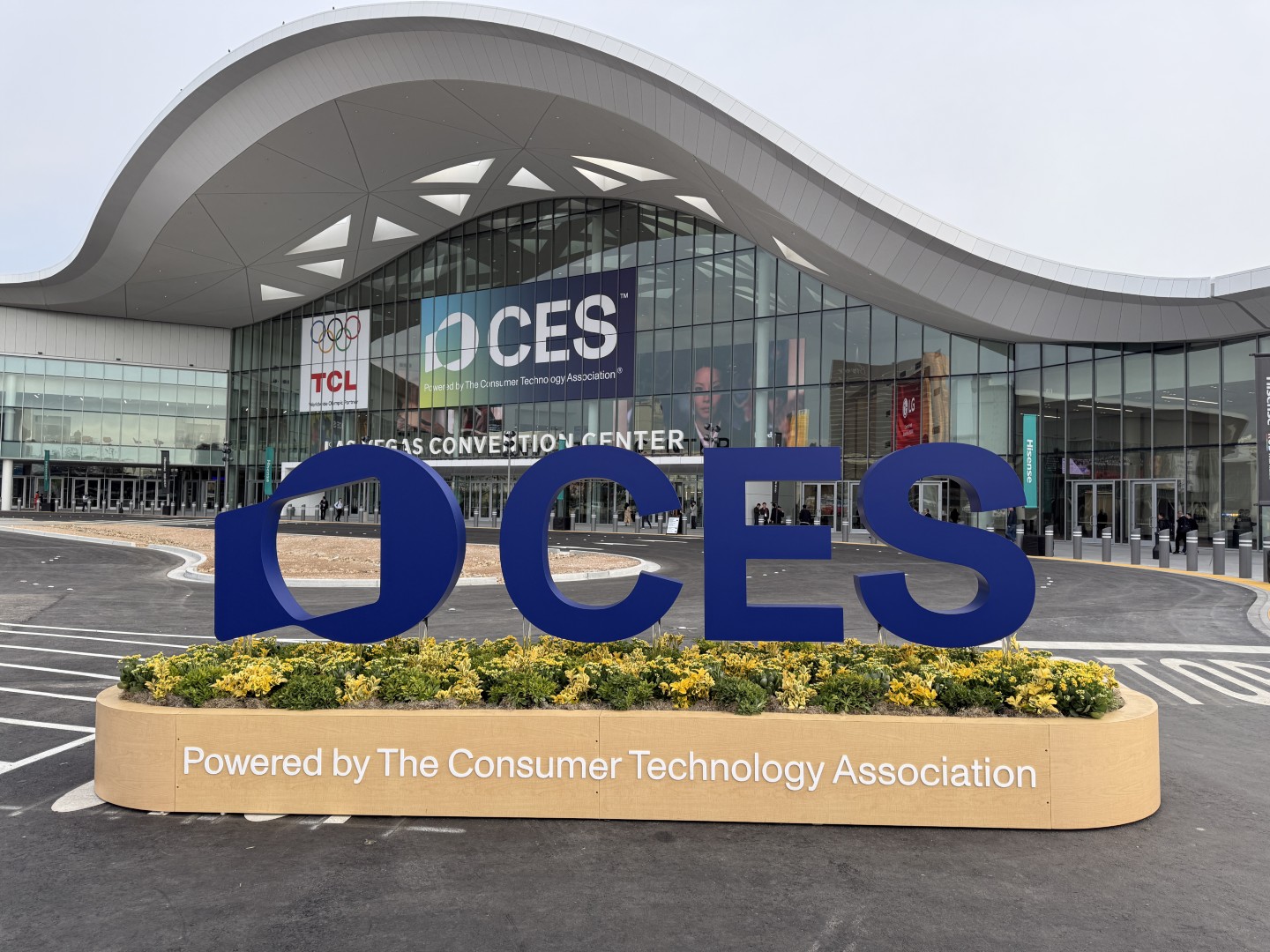
Before getting into what stood out to me at CES 2026, it’s worth being explicit about why I went there in the first place. On the surface, the answer is straightforward. CES is the largest in‑person technology event in the world. If you want to see where technology is heading — not in isolation, but at scale — it remains a unique place to walk, listen, compare, and sense what is emerging.
But there was a second, more fundamental reason. I am increasingly convinced that the word “consumer” in Consumer Electronics Show no longer describes a separate lane of technology. The consumer, the employee, and the patient are no longer distinct roles that technology neatly serves in isolation. They are the same person, moving through different contexts during the same day.
That blending was visible everywhere. The technologies shown are no longer confined to leisure or personal convenience. They travel with us into work, into healthcare, into public space, and back home again.
When you walk CES for a few days with that lens, something subtle starts to happen. Not because you are overwhelmed by a single breakthrough technology, but because, gradually, it becomes clear what no longer works.
CES is often presented as a showcase of the future. New devices, new platforms, new promises. But honestly, if you look at CES 2026 primarily as a technology exhibition, you miss the most important signal.
What stood out to me this year was not a collection of isolated innovations. It felt more like a shared acknowledgement of a structural shift. Technology is increasingly deployed not because it is interesting or novel, but because existing systems are simply no longer able to cope. You see this across healthcare, mobility, infrastructure, governance — and ultimately in how we design and run organizations.
From innovation to necessity
Much of what appeared at CES 2026 has been discussed for years. AI, sensors, connected devices, platforms — none of this is new. What does feel new is the underlying tone. The conversation is no longer really about whether to adopt these technologies, but about what happens if we don’t.
The underlying message was strikingly consistent:
- labor is scarce,
- costs continue to rise,
- complexity keeps increasing,
- and traditional scaling models are breaking down.
Technology is therefore shifting from an optimization tool to a condition for continuity. And that continuity is no longer only about efficiency or scale.
It is also about operating in a world where long‑standing alliances, assumptions, and technological certainties are coming under pressure. Topics like quantum computing were not fringe discussions at CES — precisely because of their implications. The prospect of large‑scale decryption threatens virtually all existing encryption methods. At the same time, the vulnerability or deliberate disruption of critical infrastructures — think of GPS or global connectivity dependencies — is no longer hypothetical.
Against that backdrop, not adopting new technologies, architectures, and safeguards is no longer a conservative choice, but a strategic risk that becomes harder to defend with each passing year.
From end point to starting point
Another shift that stayed with me is how often the individual suddenly becomes the starting point of systems, rather than the end point. Healthcare is a clear example. You see very clearly that:
- monitoring is moving into the home,
- observation is becoming continuous,
- and prevention is becoming more important than late-stage intervention.
The patient is no longer viewed merely as a recipient of care, but as the first link in the healthcare system. Not because it is a particularly attractive ideal, but because the alternative — waiting until someone presents with symptoms — simply does not scale. And this pattern extends far beyond healthcare. Citizens as data producers. Employees as active process participants. Consumers as part of the chain, not the final destination.
AI as a context layer, not a decision-maker
What also stood out is how differently AI was discussed compared to a few years ago. Fewer grand claims about replacement, more focus on support. I increasingly find myself avoiding the word enabler when talking about AI. It suggests something passive, almost neutral. What resonates much more with me as a term — is AI as a trainabler.
I am deliberately introducing that term here. It is not an established industry concept, but a way to name a role I saw emerging repeatedly: AI not as a neutral tool, but as something whose value depends entirely on how deliberately it is trained, guided, and constrained. By that I mean this: AI is an enormous amplifier. In the right setup, with training, guidance, and clear boundaries, it can dramatically strengthen human capability. Without that, it easily becomes something else entirely.
Maurice Dantzler captured this perfectly during a session on automotive AI when he compared untrained AI to a drunken monkey expert: vast amounts of knowledge and capability, but without instruction, supervision, and context it becomes erratic, unpredictable, and sometimes outright dangerous.
Seen through that lens, AI as a continuously present context layer starts to make more sense. Something that observes, correlates signals, and detects patterns — especially in environments where human attention is scarce or fragmented — but only if it is actively trained, constrained, and guided. Its real value is therefore not in replacing professionals, but in:
- bringing together fragmented signals,
- recognizing patterns over time,
- and being consistently available where humans simply cannot be.
This is also where friction inevitably emerges. The moment AI starts providing advice in a continuous context, questions of trust, responsibility, training ownership, and governance come to the surface. And those are not problems technology can solve, no matter how much we might wish otherwise.
Quantum computing and the collapse of our security assumptions
One session on day one has stayed with me more than I initially expected — particularly the contributions of Simon Sinisha Patkovic and Dave Krauthamer. What became painfully clear is that we are rapidly approaching a point where many of our long‑held assumptions about digital security no longer hold.
For years, the impact of quantum computing on cryptography was framed as a distant, almost abstract problem. Something to keep an eye on. Something for the roadmap. Something for the next generation of CISOs. That framing no longer holds. Two dynamics are converging at speed.
First, we are getting significantly better at the application of quantum algorithms for cryptographic attacks. This was grounded in concrete research rather than speculation. The work referenced came from Google Quantum AI, with research led by Craig Gidney, and focused explicitly on the number of physical qubits required to break RSA‑2048.
Improvements in the practical use of algorithms such as Shor’s algorithm mean that far fewer qubits are required than previously assumed. Estimates that once assumed roughly 20 million physical qubits have been revised downward to around one million — a reduction by a factor of twenty.
Second, the scale at which quantum hardware becomes truly disruptive is moving closer — fast. The often‑quoted threshold of roughly one million qubits, long associated with a ten‑year horizon, is now increasingly discussed as something that may be achievable before 2030. Crucially, these are no longer abstract projections. They are based on concrete vendor assessments of how quickly quantum hardware capacity can realistically scale into usable, fault‑tolerant systems. Based on those trajectories, reaching the order of one million physical qubits in a single system appears increasingly plausible well before 2030.
The combined effect is sobering. Encrypted data that is being exfiltrated today may still be highly relevant by the time it becomes decryptable. The familiar idea of store now, decrypt later is no longer a niche concern for cryptographers or CISOs.
It is becoming an international security issue, with implications for governments, critical infrastructure, healthcare systems, and global commerce. This topic deserves far more space than a single section allows. I will return to it in a dedicated article, because quantum computing is no longer a future risk to digital security — it is a rapidly approaching reality that demands structural preparation now.
Technology forces organizational choices
Perhaps the most underestimated signal of CES 2026 is that technology forces organizations to make explicit decisions about things that could remain implicit for years.
Questions that kept resurfacing, often between the lines:
- Who is responsible when a system provides advice?
- When is “good enough” actually good enough?
- Where is the boundary between autonomy and oversight?
- And who carries the risk in continuous monitoring scenarios?
These are not IT questions. They are organizational and governance questions. Technology does not resolve them — it makes them impossible to ignore.
Closing: this is only the beginning
CES 2026 felt less like an end point and more like an inflection point. Not because everything suddenly became clear, but because it became much clearer what no longer works. What remains are not ready-made answers, but a set of uncomfortable questions that can no longer be postponed.
In follow-up articles, I will dive deeper into several themes that converge here, including:
- the patient as the first mile of healthcare,
- AI as a trusted advisor versus the risk of delayed intervention,
- continuous monitoring and its tension with liability,
- and what all of this demands from architecture and governance in complex organizations.
This article is meant as an initial, reflective exploration. But it would be incomplete without one more, personal observation. I left CES energized and genuinely triggered — in the best possible sense. Energized because I saw how much technology is converging around improving quality of life, making knowledge, care, and prevention accessible to people who are currently excluded from it. And hopeful, because what stood out was not technology as a cold search-and-replace for human skills, but technology as an extension of human knowledge and capability.
Again and again, I saw technologies positioned not to replace judgment, empathy, or expertise, but to augment them — to carry context, reduce friction, and amplify what people already do well.
The real discussion starts now.
In the coming pieces, I will zoom in on a number of these themes and possibilities — not to predict the future, but to explore how emerging technologies are opening up new choices, new capabilities, and sometimes even delight in places you might not expect.